


Solution
Chungwoon Biotech's TMF Feed Solution for
Sustainable Livestock Industry
What is TMF feed?
TMF (Total Mixed Fermentation) feed is a complete feed product made by
blending domestically produced roughage, agricultural by-products,
and grain-based ingredients, followed by a specialized fermentation process.
Unlike ordinary mixed feed, TMF undergoes fermentation, resulting in a finished product
that maximizes livestock digestion efficiency and productivity.
It is a core technology of Chungwoon Biotech.

Key Benefits of TMF Feed
Fiber breakdown into low-molecular compounds
→ Improves digestion and nutrient absorption
Enrichment of beneficial microbes
→ Enhances gut health and boosts immunity
Anaerobic fermentation process
→ Reduces odor and enables long-term storage
Chungwoon Biotech’s Production Process
1
Complex Microbial Cultivation Process


Cultivation of
patented multi-strain
beneficial microbes
Sourcing of by-products
such as mushroom substrate,
distillers grains, rice bran,
and rice straw
Mixing of
concentrate feed(by-products)
with additives
Addition of
low-cost roughage,
high-performance hay input
2
Fermentation & Mixing Process

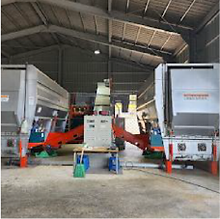


Microbial inoculation
Microbial decomposition
Fermentation mixing
1 hour uniform mixing
and fermentation
Roughage chopping
Standardized size cutting
Transfer to packaging
Automated system operation
3
Processing & Packaging Process

Compressed packaging
Automated packaging machines
Fermentation in packaging
Sealed fermentation
for over 10 days
Long-term storage
Maintains quality
for over 6 months
Product consumption
Increases productivity by 15%,
reduces ingredient cost by 20%
Reducing Costs While
Boosting Productivity
South Korea relies on imports for
95% of its livestock feed ingredients,
causing a continued increase in the burden on farmers
due to fluctuations in global grain prices.
Chungwoon Biotech addresses this structural issue
through its fermentation technology.
?
Why
Why is TMF Feed Economical?

Improved quality of domestic ingredients
Fermentation enhances the functionality and storability of low-nutrient domestic feed ingredients.

Reduced reliance on imports
Increases the use of local ingredients through fermentation, contributing to feed self-sufficiency.

Improved farm productivity
-
Boosts milk yield in dairy cows.
-
Reduces manure odor and environmental impact.
-
Maximizes feed efficiency by improving rumen health.

TMF Feeed Enhances Livestock Digestion Efficiency
TMF feed partially breaks down fibrous components such as cellulose
and hemicellulose through fermentation,
transforming them into a more digestible form for livestock.
specially in ruminants, the fiber is pre-softened before microbial activity in the rumen begins,
allowing for more efficient energy utilization.
As less energy is required for digestion, it leads to increased milk production
or higher weight gain in meat-producing animals.

Comparison Chart: Before and After TMF Feed Use
(Three farms located in Naju and Yeongam, Jeollanam-do)
Fermented feed is rich in beneficial microbes
such as lactic acid bacteria, yeast, and Bacillus subtilis,
which help balance the gut microbiota.
This suppresses harmful bacteria, promotes enzyme secretion,
boosts immunity, and overall enhances digestive efficiency

In addition, the fermentation process produces lactic acid, acetic acid, enzymes, B vitamins, and amino acids,
which enhance metabolic efficiency and nutrient absorption in the digestive tract.
Lactic acid helps stabilize the rumen pH, while fermented amino acids are rapidly utilized by the body.

TMF Feed and Methane Reduction Effect
Ruminants release methane gas during the breakdown of fiber in the rumen,
a process driven by methanogenic microbes (Methanogens)

However, fermented feed like TMF pre-decomposes the fiber,
altering the fermentation rate and type in the rumen.
This shift increases propionic acid production,
which consumes more hydrogen thereby reducing the hydrogen available for
methane generation and ultimately lowering methane emissions.
Additionally, TMF feed enhances nutrient absorption,
decreasing the amount of undigested feed that undergoes excessive fermentation.
As a result, methane production from prolonged fermentation processes is also reduced.

Upcycling of Low-Value By-products
Chungwoon Biotech goes beyond simply producing feed
—we breathe new life into agricultural by-products that were once discarded.
What Are
Agricultural By-products?
Agricultural by-products (also known as residues) are plant-based materials
left over after harvesting, processing, or consumption of crops.
A significant amount of these remains are either underutilized or thrown away.
Examples of Common Agricultural By-products

Rice straw, rice bran, rice husks

Corn
Corn stalks,
husks, cobs

Vegetables
Outer lettuce leaves, radish greens,
carrot scraps

Fruits
Fruit peels, seeds, branches
Grains
Rice straw, corn stalks, and food processing residues have traditionally been discarded or left unused.
However, when these by-products are simply thrown away,
they contribute to environmental pollution through methane emissions, foul odors, and leachate.
By fermenting or drying these materials for use as fertilizer or livestock feed,
carbon emissions can be reduced and environmental impact minimized.
This technology proves especially valuable in drought-prone regions
where securing feed ingredients is difficult.


Scene of sealing and fermenting TMF feed after microbal mixing
Most importantly, these materials—once discarded or requiring additional disposal costs—
can now become new sources of income, offering significant benefits to the local economy.
Sustainable livestock farming is not a choice—it’s a necessity.
Chungwoon Biotech’s TMF fermented feed offers a multi-layered solution:
It increases animal productivity, reduces environmental load, and improves feed self-sufficiency.
By utilizing low-cost, high-efficiency domestic resources,
leveraging microbial fermentation technology, and contributing to greenhouse gas reduction,
TMF feed is not merely an alternative,
but a core strategy to address the climate crisis and ensure global food security.
Chungwoon Biotech will continue to bridge cutting-edge technology
with real-world farming, partnering with farmers both locally and globally
to build a more sustainable and self-reliant livestock ecosystem.